Pressure Cooker Leftovers Safety: Cool, Store, Reheat
By Lina Ortega • 2nd Sep
At a glance
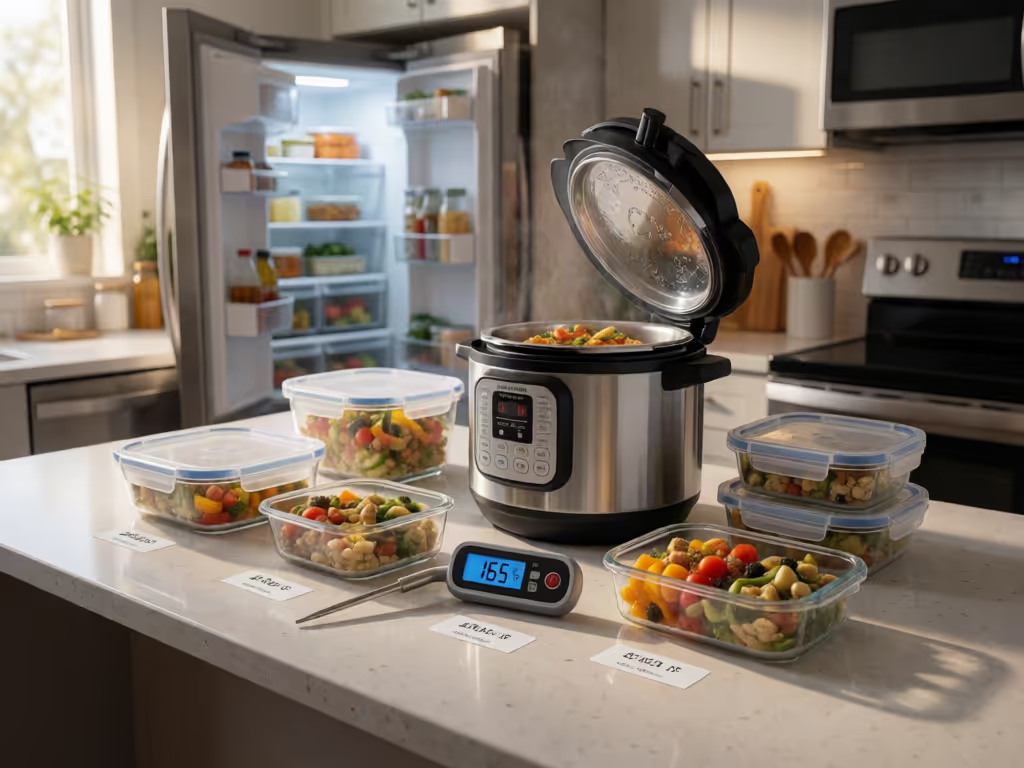
The safest pressure-cooker leftover system is simple: refrigerate promptly, divide large batches into shallow containers, store refrigerated portions for 3–4 days, and reheat leftovers to 165°F with a food thermometer.
- 1. Best overall: Treat the meal like any cooked perishable food, not like food that can remain in the cooker.
- 2. Best for batch cooking: Move soups, stews, beans, and other dense foods from the deep inner pot into several clean, shallow containers. Cover, label, refrigerate, or freeze portions promptly.
- 3. What decides it: Use a saucepan, microwave, or oven when reheating because no collected guidance establishes a pressure-cooker-specific method or confirms a particular Keep Warm setting. For soup, bring it to a rolling boil; do not rely on steam alone.
Important: The FDA two-stage cooling benchmark applies to food-service Food Code settings, not automatically as a universal household rule.
Pressure cooker leftovers safety comes down to what happens after the lid comes off. Pressure cooker leftovers storage follows the same rules as any cooked perishable meal: move it out of the temperature danger zone promptly, portion it for fast chilling, and reheat it to a measured safe temperature. That simple system protects both dinner and the grocery budget, because a batch of beans, soup, rice, or braised meat only pays off when it becomes several safe, usable meals.
The cooker is excellent at making a large batch. It is not, by itself, a storage container or a food-safety plan. Use this numbered workflow after every batch, whether you cook on a stovetop or in an electric model. If you are still learning the fundamentals, our pressure cooker basics guide covers safe operation before you move on to leftover storage.
1. Start the leftover clock when cooking or hot holding ends
Cooked perishable food should be refrigerated within 2 hours after cooking or after it comes off active hot holding. If the surrounding temperature is above 90°F, that window drops to 1 hour. Food left at room temperature for more than that should be discarded.
The reason is straightforward: bacteria can grow rapidly in the 40°F to 140°F temperature range.
The practical decision point
When dinner is over, choose one of these paths:
- Serving now: Keep food at 140°F or warmer while it is being held for service.
- Saving for later: Portion and refrigerate promptly.
- Not sure how long it has been sitting: Use the clock, not smell or appearance, to make the call.
Do not assume a cooker's "Keep Warm" setting is automatically a safe hot-holding setting. Safe hot holding is temperature-based, and there is no one-size-fits-all evidence for how a particular pressure cooker setting performs.
A pressure cooker can make dinner fast; shallow containers keep tomorrow's lunch safe.
2. Cool pressure-cooked food in portions, not in the cooking pot
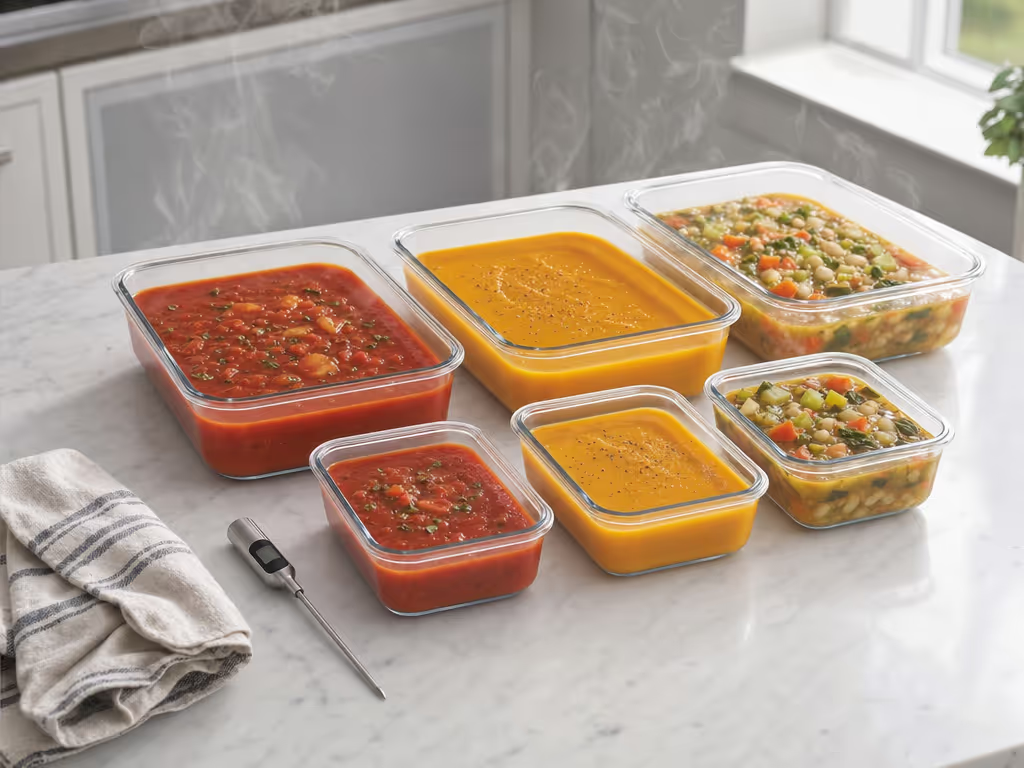
For cooling pressure cooked food, the highest-value move is simple: divide a large batch into several clean, shallow containers. USDA and CDC guidance supports packaging warm or hot food in shallow containers. USDA specifically gives a large pot of soup as an example.
This matters most for dense or liquid-heavy meals:
- soups and stews
- beans and lentils
- curries and braises
- cooked grains mixed into a meal
- shredded meat in sauce
For a large batch, package the food in several clean, shallow containers rather than keeping it all together for refrigeration. Small portions may be placed in the refrigerator because they chill faster.
A no-fuss cooling checklist
- Portion the food into several clean, shallow containers.
- Use an ice or cold-water bath for a large batch if you need faster chilling before refrigeration.
- Cover or seal containers before promptly refrigerating or freezing. Airtight packaging helps retain moisture, limits odors, and keeps outside bacteria out.
- Avoid one giant container just because it saves dishes. The small cleanup savings are not worth slower cooling or a batch you later need to discard.
For food-service workers, FDA Food Code training uses a two-stage cooling benchmark for cooked time/temperature-control-for-safety foods: cool from 135°F to 70°F within 2 hours, then to 41°F or below within the following 4 hours. That is a food-service standard, not a household slogan to apply blindly. For home meal prep, the useful lesson is the method: shallow portions and active chilling beat a deep pot left out to drift downward.
3. Set up storage that makes the 3 to 4 day limit usable
Refrigerated leftovers are best used within 3 to 4 days. Keep the refrigerator at 40°F or below. If you will not realistically eat a portion in that window, freeze it while it is still a planned meal, not when it has become a mystery container at the back of the fridge.
Frozen leftovers keep their best quality for 3 to 4 months. They remain safe indefinitely while frozen, but longer storage can mean drier texture and weaker flavor. Keep the freezer at 0°F or below.
Labeling is the meal-prep tool that prevents waste
Put two details on each container:
- What it is: "black bean chili," "chicken curry," or "rice and lentils"
- The date it was cooked
That is enough for most home kitchens. You do not need specialty accessories or a complicated tracking app. A marker and storage containers you can reliably clean and seal are the must-haves. For keeping the appliance itself in good working order, see our pressure cooker maintenance guide. Fancy container systems are nice-to-haves.
This is where cost transparency matters. Labeling translates prices into cost per meal you actually eat. Value shows up in leftovers, not launch-day hype.
4. Reheat to 165°F (do not rely on steam as proof)
All leftovers should reach 165°F, measured with a food thermometer. "Hot and steaming" can be encouraging, but it is not the stated endpoint.
For sauces, soups, and gravies, bring them to a rolling boil. For plated meals, casseroles, beans, meat, and grain bowls, heat thoroughly and verify the temperature.
Choose the reheating method that fits the portion
USDA guidance supports these practical routes:
- Saucepan: Useful for soup or stew, including frozen soup or stew.
- Microwave: Cover the food, rotate it during heating, check several places, and allow standing time before checking temperature.
- Oven: Useful for casseroles and combination meals, including frozen portions.
Frozen leftovers do not always need thawing first. They can be reheated from frozen using the appropriate method, though they will take longer.
5. Treat reheating leftovers in a pressure cooker as unverified, not a shortcut
People often ask about reheating leftovers in a pressure cooker, especially soup, because the pot is already on the counter. The safety endpoint is clear: leftovers need to reach 165°F, and soups should reach a rolling boil. But there is no appliance-specific guidance establishing a pressure-cooker reheating method, timing, or setting.
For that reason, use a saucepan, microwave, or oven when reheating is the goal. Follow the method-specific steps above and verify 165°F with a food thermometer.
The reliable, low-clutter approach is buy once, service long: keep a basic food thermometer in working order and use the heating method that gives you control. A thermometer does more for meal prep food safety than another specialized cooker mode.
6. Do not leave cooked food in the pressure cooker overnight
A pressure cooker pot on the counter is not a substitute for safe hot holding. Once cooked food is no longer being held at 140°F or warmer, refrigerate it within 2 hours; in temperatures above 90°F, the limit is 1 hour. Leaving food in the cooker overnight does not become safe because the lid is closed.
If you intentionally hold cooked food for service, it needs to remain at 140°F or warmer. Do not guess based on an appliance label or a warm exterior. If you cannot verify that the food stayed safely hot, portion and refrigerate it instead.
That distinction prevents a common costly mistake: preserving a big batch in the pot to avoid dishes, then losing every portion. I learned long ago, after totaling the hidden costs of a fancy appliance and its hard-to-replace parts, that practical systems win. The same logic applies here: a few washable containers cost less than wasted meals.
7. Use this five-minute post-dinner routine every time
Build the process into cleanup so it does not depend on memory at 9 p.m.
Your repeatable leftovers routine
- Finish serving. Start the 2-hour clock when cooking or active hot holding ends.
- Portion. Transfer the remaining food from the deep cooker pot to clean, shallow containers.
- Cool efficiently. Refrigerate the small containers promptly; use an ice or cold-water bath first for a large batch if useful.
- Seal and label. Name and date every portion.
- Store cold. Keep the refrigerator at 40°F or below.
- Plan the exit. Eat refrigerated portions within 3 to 4 days, or freeze them for later.
- Reheat with a thermometer. Bring leftovers to 165°F; bring soups, sauces, and gravies to a rolling boil.
8. Quick answers to common leftover questions
Can I leave cooked food in the pressure cooker overnight?
Not if it is simply sitting out. Refrigerate cooked perishable food within 2 hours, or within 1 hour when the temperature is above 90°F. A closed lid does not replace refrigeration. If food is being held for service, it must stay at 140°F or warmer.
Can I reheat soup in a pressure cooker?
The safe target is established (165°F for leftovers, and a rolling boil for soups), but there is no documented pressure-cooker-specific reheating procedure in the available guidance. A saucepan is the more direct option for soup because you can stir and monitor it as it heats.
What is the "2-2-4 rule" for leftovers?
That phrase can blur separate guidance. For home leftovers, follow the USDA consumer rule: refrigerate within 2 hours, or 1 hour above 90°F. The FDA's food-service cooling framework uses 2 hours to cool cooked food from 135°F to 70°F, then up to 4 more hours to reach 41°F or below. It is designed for Food Code settings, not a universal home-kitchen catchphrase.
Make your next batch earn its keep
Before you cook your next pressure-cooker meal, clear space in the refrigerator, set out shallow containers, and make sure your food thermometer is easy to reach. That one-minute setup turns a pot of food into planned lunches rather than a risky overnight hold. Safe leftovers are not extra work; they are the part of batch cooking that makes the savings real.
Related Articles