Dishwasher-Safe Pressure Cookers: Which Parts Truly Clean Fast
By Nia Mbatha • 21st Sep
What to do
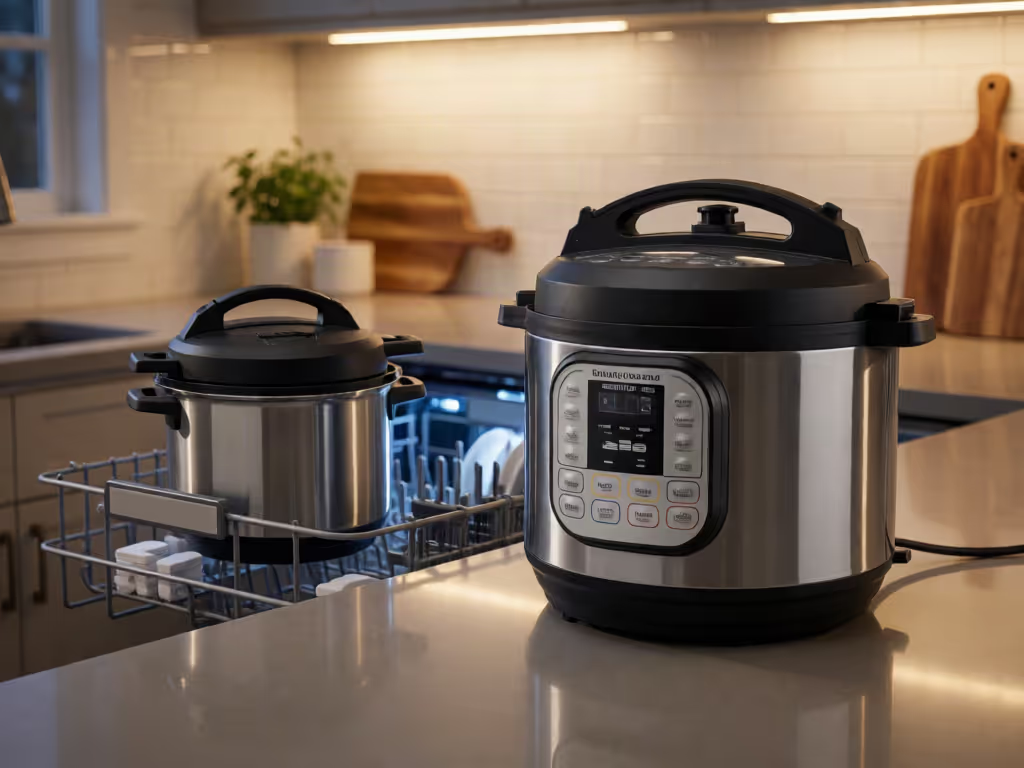
Treat dishwasher safety as a model- and component-specific instruction. Check the exact manual, separate any powered appliance from approved removable components, and hand-clean and inspect the seal and pressure path where your manual directs it before drying everything fully.
- Start with: Identify the exact model and each component’s cleaning rule.
- Then: Use the dishwasher only where the manual explicitly permits it and follow its removal conditions.
- Important prerequisite: For Instant Pot appliances covered by its FAQ, keep the appliance, cord, and plug out of water. Dry removable parts completely before reassembly or storage where the manufacturer directs it; dishwasher permission never replaces inspection.
Important: Rules vary sharply by model: Ninja’s OS401 base and pressure lid are excluded, while specified Presto stainless stovetop models are conditionally dishwasher safe. There is no universal rule for every gasket, valve, lid, or aluminum cooker.
A dishwasher safe pressure cooker is not a single yes-or-no category. The available instructions assign different cleaning rules to particular models and components: for example, the Ninja OS401 has a cooker base and pressure lid, while the named Presto stovetop models have their own conditions. If you want an easy clean electric pressure cooker, the practical question is not "Can this go in the dishwasher?" It is: Which exact part, on this exact model, can go in, and what must still be cleaned and checked by hand?
That distinction prevents a common and frustrating mistake: treating a dishwasher cycle as a complete cleaning routine. It is not. On models with a safety-critical steam path, the relevant valves, vents, and anti-clog pieces still deserve inspection and, where directed, a small brush.
Ease-of-use is a safety feature, not a luxury.
The Short Answer: "Dishwasher Safe" Needs a Parts List
A product description that calls a pressure cooker dishwasher safe can obscure more than it clarifies. The useful label is component-specific.
Powered electric bases: follow the model instructions
For powered appliances, the manufacturer’s water-exposure instructions matter. Instant Pot's general care guidance says not to immerse the appliance, cord, or plug in water and not to rinse the appliance under a tap.
The Ninja Foodi 10-in-1 8-quart XL Pressure Cooker OS401 manual is equally direct: never put either its cooker base or its pressure lid in the dishwasher.
That does not mean every electric pressure-cooker lid has the same rule. A removable-lid dishwasher-safe claim must be confirmed in the manual for the exact model. "The lid comes off" is not dishwasher approval.
Stovetop cooker bodies: sometimes, with conditions
Stovetop units can have different permissions. For example, Presto states that its 4-quart stainless steel 01341 and 6-quart stainless steel 01365 models are dishwasher safe only after you remove the sealing ring and overpressure plug.
That is a meaningful convenience benefit, but it is not permission to classify every stovetop pressure cooker, or every component of those models, as dishwasher safe. It is a model-specific instruction with two explicit exclusions.
Immersible does not mean dishwasher safe
This wording catches people out. Presto's instructions for certain 4- and 6-quart aluminum pressure cookers say all parts, including the sealing ring and pressure regulator, are fully immersible for cleaning. That supports washing them in water. It does not establish dishwasher safety.
If the manual says "wash with hot, sudsy water," treat that as hand-wash guidance. If it says "fully immersible," treat that as permission for immersion. Neither phrase substitutes for the word "dishwasher."
What Actually Makes Cleanup Fast
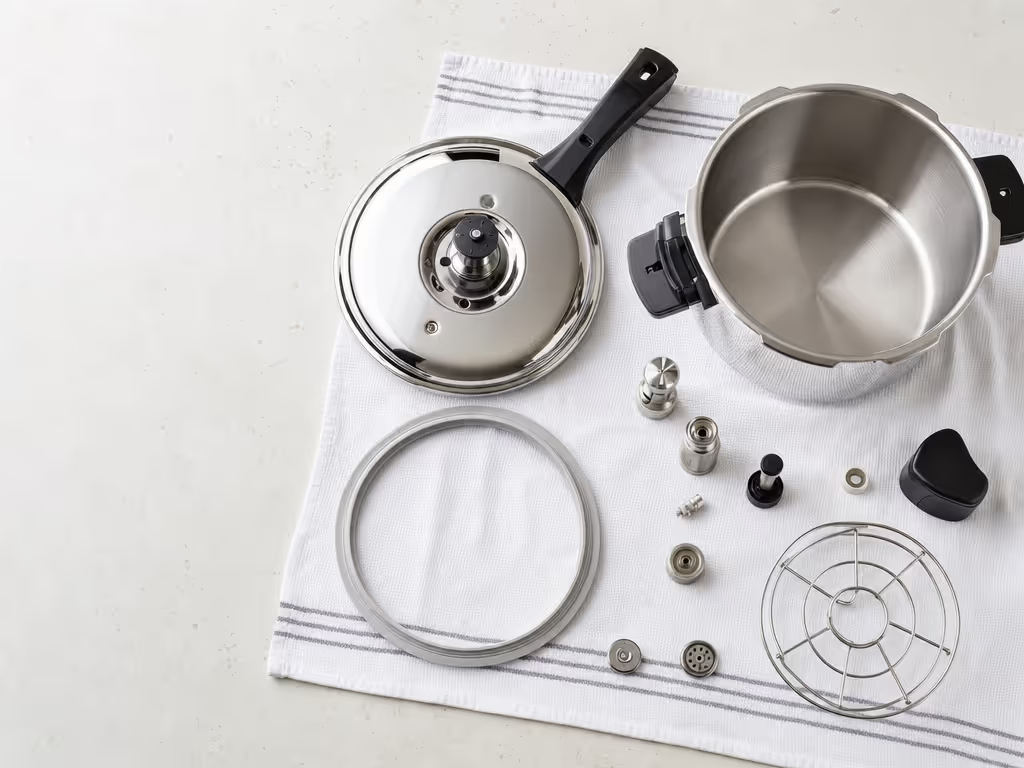
The available evidence includes no independent test measuring comparative cleanup speed or outcomes for dishwashing versus handwashing pressure cookers. A practical way to judge a quick-cleanup model is to count the separate tasks that remain after cooking.
A low-friction maintenance routine has four qualities:
- The cooking vessel releases food easily. Whether you prefer a dishwasher safe inner pot or a hand-wash-only vessel, inspect it for stuck-on residue immediately after serving.
- The lid separates into understandable, reachable parts. You should be able to see where food or moisture can sit.
- The steam path is simple to inspect. A component that is technically washable but hard to examine is not genuinely easy-care.
- Every removable piece dries fully before storage. Follow your model's directions for seals, valves, or lid recesses that need drying.
I rate cleanup by the number of handling steps, not the boldness of a dishwasher claim. A lid that is easy to grip, open, inspect, and wipe is often more practical than one with a vague "top-rack safe" promise buried in fine print. Testing a lid with winter gloves on taught me that spec sheets do not reveal the whole experience; for my aunt, arthritis settled the question of what "easy" meant.
The Parts That Must Not Be Treated as Set-and-Forget
A dishwasher may handle approved components, but it cannot replace the inspection steps required by the manufacturer. This is the line between a tidy appliance and a ready-to-use appliance.
Sealing rings
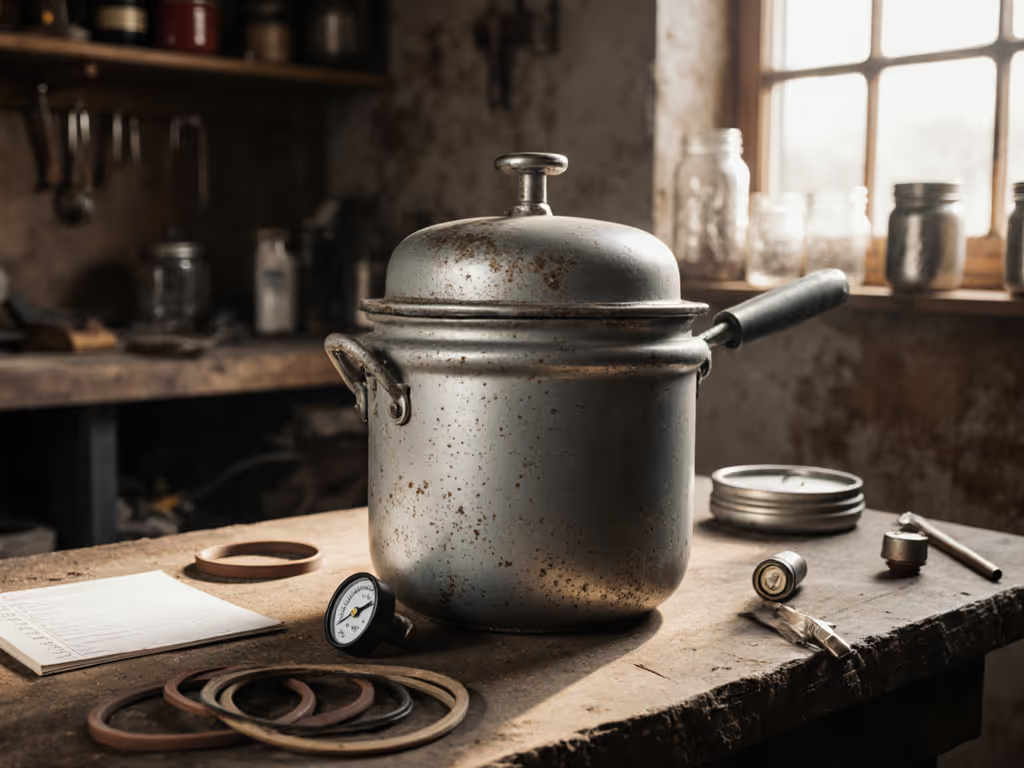
For the Presto 4- and 6-quart aluminum models covered by its manual, remove the sealing ring when washing it and wash it with hot, sudsy water after each use. The same manual identifies hardening, deformation, cracking, wear, and pitting as signs that call for replacement.
That is not a universal rule that rings can never enter a dishwasher. Nor is it proof that every ring can. Follow your manual for cleaning, drying, inspection, and replacement guidance.
For those same Presto aluminum models, the manufacturer recommends replacing the sealing ring and overpressure plug at least every two years, or sooner if either part shows those signs of deterioration. Other cookers may have different parts and different schedules, so do not transfer that timeline blindly.
Valves, vent pipes, and anti-clog pieces
The models covered by the available manuals require specific attention to these components. Before use, the Instant Pot LUX Series manual directs users to check the steam release valve, float valve, and anti-block shield for clogging. The Ninja OS401 guide likewise calls for checking the pressure lid for debris blocking the valves and says to clean its anti-clog cap with a cleaning brush after every use.
For the Presto aluminum stovetop models, the vent pipe should be clear; the instructions call for a small brush or pipe cleaner if it is blocked or partly blocked.
The takeaway is firm: dishwasher permission never cancels a manual blockage check. The manuals for these models require an inspection step in addition to washing.
Lid channels and undersides
The underside of a lid is where design quality shows up. Food splatter, starchy residue, and condensation can collect around fittings and creases. If your manual does not explicitly approve the lid for the dishwasher, hand-clean it with attention to these areas. Then dry it as directed.
Quiet, clear, and clean always win. A complicated lid that hisses, hides residue, or makes you squint to see whether a passage is clear is not good kitchen UX, no matter how many cooking modes it advertises.
Nonstick vs. Stainless Cleanup: Ask a Better Question
The usual nonstick vs stainless cleanup debate is often too broad. The evidence available here does not establish that one material cleans faster across pressure cookers, or that either material is universally dishwasher safe.
Instead, evaluate the actual pot and its instructions:
- Is the vessel identified as dishwasher safe in your model's manual?
- Can you see cooked-on residue against its interior surface?
- Is the rim easy to wipe before the lid goes back on?
- Does its shape leave food trapped under a rolled edge or around handles?
- Can you lift it steadily when full enough to be messy?
For aluminum pressure cookers, avoid turning general internet warnings into a rule when the manual is silent. One kitchen-appliance vendor attributes aluminum darkening in dishwashers to alkaline detergent, but that is not a model-specific manufacturer instruction. Presto's aluminum manual separately notes that minerals in water and foods can darken the interior, and says that discoloration does not affect food cooked in the cooker. Check the instructions for your own unit rather than guessing from material alone.
A Cleanup-First Routine That Takes the Guesswork Out
Use this sequence after every cook. It is deliberately short, but it covers the places that matter.
1. Cool first
For Instant Pot appliances covered by the manufacturer FAQ, let the appliance cool to room temperature before cleaning or storing it. Follow the instructions for your own model before cleaning any hot component.
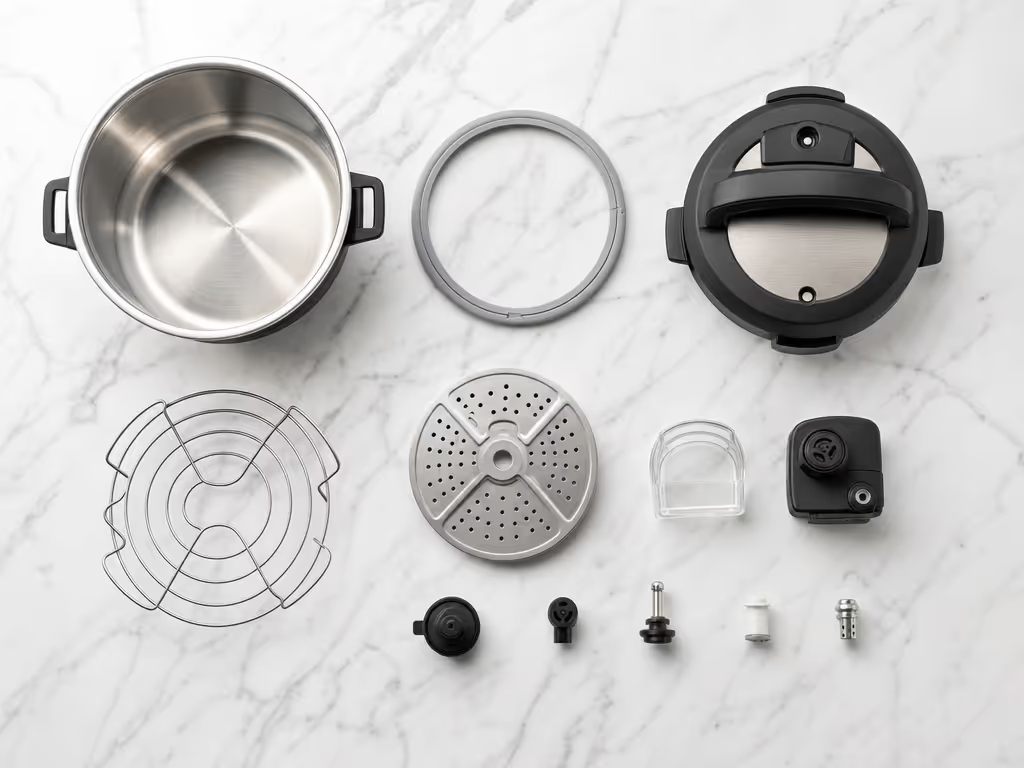
2. Separate by cleaning rule
Make three groups:
- Powered appliance: Follow its instructions for wiping and water exposure. Instant Pot says not to immerse the appliance, cord, or plug.
- Dishwasher-approved components: Load only if your exact manual says they are approved, and follow stated removal conditions.
- Hand-clean and inspect components: Include any lid parts, seals, valves, vent paths, and other pieces for which your manual calls for hand cleaning or inspection.
3. Clean the safety path by hand
Remove food residue, use a small brush where your manual directs, and look through or into the relevant openings. Do not rely on water flow alone as proof of clearance when your manual requires a blockage check.
4. Dry before reassembly or storage
Pressure-canner guidance from the University of Georgia Cooperative Extension emphasizes drying the canner, lid, gasket, and removable valves after washing. That guidance is specifically for canners, but it reinforces the importance of following your cooker's own drying and storage instructions.
FAQ: Dishwasher-Safe Pressure Cooker Parts
Can you put a pressure cooker in a dishwasher?
Do not assume the whole appliance can go in. Dishwasher status depends on the exact model and component. The Ninja OS401 base and pressure lid must not go in a dishwasher. Presto says its stainless 01341 and 01365 stovetop models are dishwasher safe only with the sealing ring and overpressure plug removed.
Can you wash the top of a pressure cooker in the dishwasher?
Only if your manual specifically approves that lid. The pressure lid for the Ninja OS401 is explicitly excluded. Do not make a category-wide rule from one model, but do not assume a removable lid is dishwasher safe either.
Can an aluminum pressure cooker go in the dishwasher?
Do not infer that from an instruction saying it is fully immersible. The available Presto aluminum manual supports immersion for cleaning but does not label the cooker dishwasher safe. Check the manual for the exact cooker.
The Best Test Before You Buy or Clean
Do not shop for a label; shop for a routine you can repeat without strain or doubt. Before buying, download the manual and find the care section. Look for explicit wording for the components your model has, such as its lid, ring, valves, removable pot, or powered appliance. If those instructions are unclear, that is not a minor documentation flaw, it is a usability failure.
Tools should fit you. A truly easy-clean pressure cooker is one whose parts you can lift, see, reach, clean, inspect, and dry with confidence. For further exploration, compare the care pages of the exact models on your shortlist and write the permitted cleaning method beside each individual component. That small checklist will tell you far more than a broad dishwasher-safe badge.
Related Articles