Ground Beef Pressure Cooker Meatloaf and Turkey Time Guide
By Mei Tanaka • 11th Oct
What to do
Pressure-cooker meatloaf works best as a repeatable recipe, not a minutes-per-pound calculation. Use a recipe-specific schedule, follow your cooker’s liquid and capacity rules, and verify doneness with a thermometer.
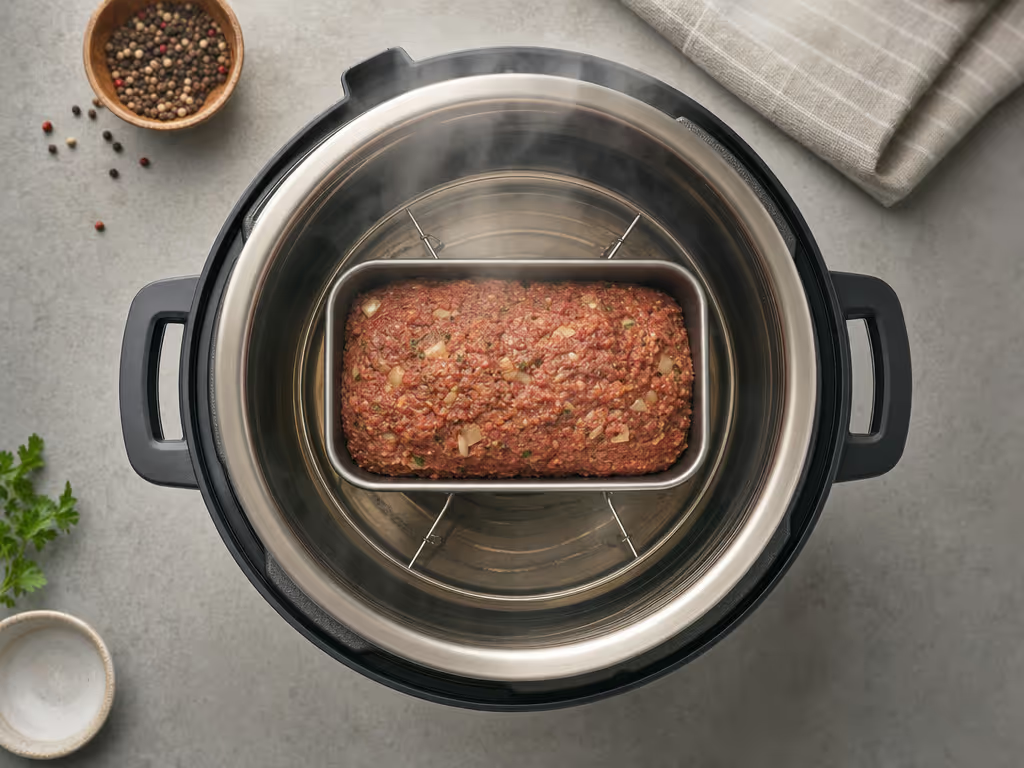
- Start with: Use a pot-in-pot setup: place the loaf pan on a trivet, with the required liquid in the main pot. Your appliance manual controls the minimum liquid and fill limit.
- Then: Follow the chosen recipe’s pressure time and release method. Published examples differ substantially, so do not average them or adapt them by weight alone.
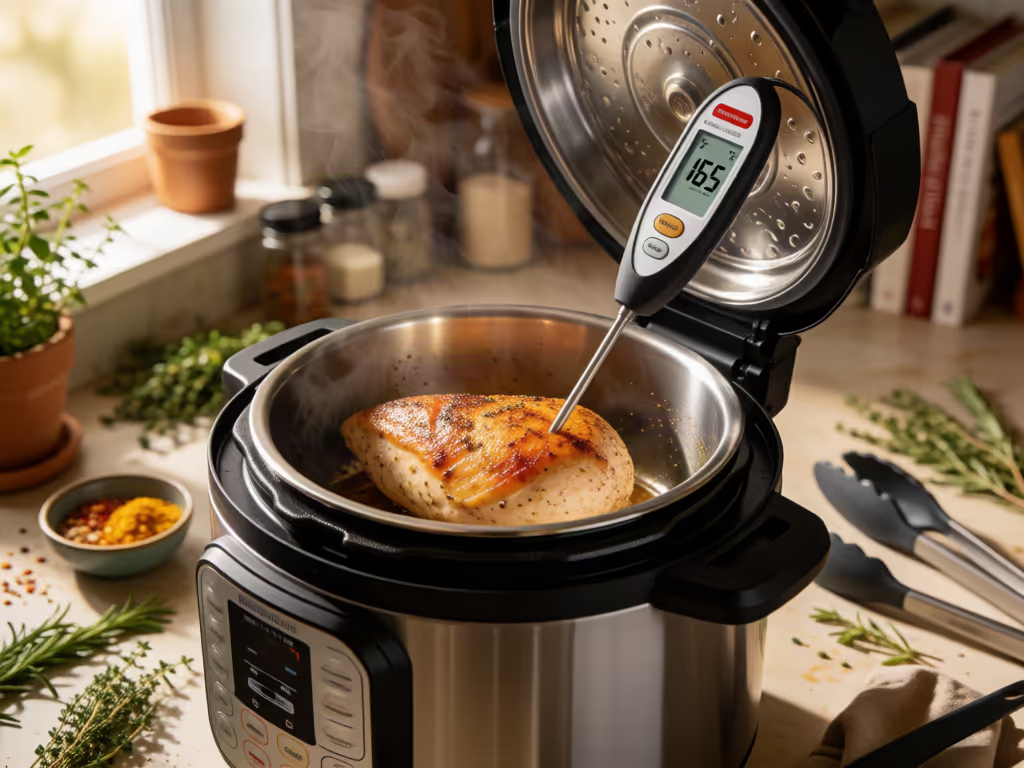
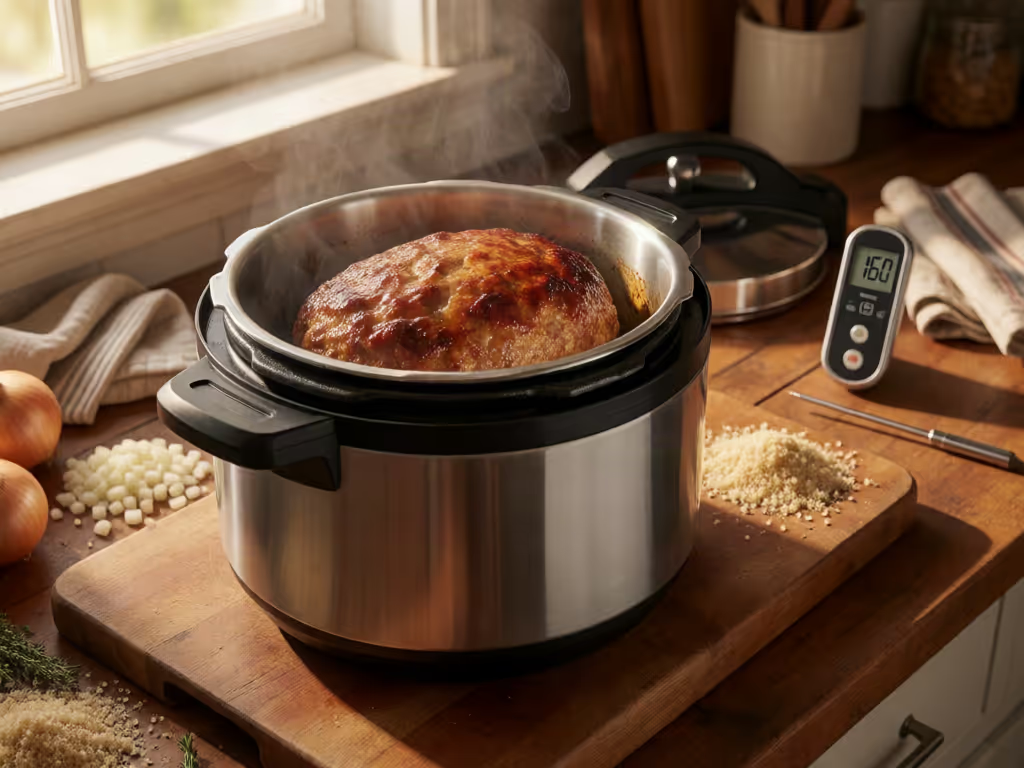
- Important prerequisite: Check the internal temperature before removing the loaf: 160°F for ground beef or pork, and 165°F for ground turkey.
Important: Pressure time, color, and texture do not prove doneness; recipe and appliance differences mean the thermometer is the final safety check.
A ground beef pressure cooker meal can be fast and repeatable, but pressure cooker meatloaf is not a "minutes per pound" problem. Published recipes use different formulations, cooker details, and release methods. The reliable system is simpler: use a recipe-specific schedule as a starting point, follow your own cooker's liquid and capacity rules, and let a food thermometer decide when dinner is done.
That is templates over guesswork, and it turns a rushed weeknight into a process you can repeat.
The one rule that makes the timing guide safe
Treat the programmed time as a recipe-specific starting point, not proof that ground meat is cooked.
- Ground beef and ground pork: cook to 160°F (71.1°C).
- Ground turkey: cook to 165°F (73.9°C) because it is ground poultry.
- Cooked leftovers: reheat to 165°F.
Check the internal temperature with a food thermometer before you remove the food from the heat source. Do not use color, texture, or the fact that the cooker completed its cycle as a substitute.
This distinction matters when adapting a pressure cooker turkey loaf. Keep the thermometer targets distinct: ground turkey must reach 165°F, while ground beef must reach 160°F. Loaf weight does not change those safety thresholds.
Templates turn pressure into predictable, calm weeknights and full fridges.
Step 1: Choose the right form for ground meat
For meatloaf, use a pot-in-pot setup: the meat mixture goes in a loaf pan set on a rack or trivet, while liquid goes in the main cooking pot below it. This keeps the loaf contained and provides the liquid needed to generate pressure.
For loose ground beef, ground turkey, or pressure cooking ground pork for another dish, do not borrow meatloaf timings. There is no universal, evidence-backed time chart for loose ground meat, frozen ground meat, or every pressure-cooker model. Use recipe instructions written for that dish, then confirm its final temperature.
Do you add water to meat in a pressure cooker?
For a pot-in-pot meatloaf, yes: water or other recipe-specified liquid belongs in the main pot, not necessarily mixed into the meatloaf. One pressure-cooker manual, for a specific 12-quart model, requires at least 1/2 cup liquid and says never to operate without liquid. Your cooker may require a different amount, so its manual controls. For a refresher on pressure cooker safety valves and PSI control, review how pressure, sealing, and safety mechanisms work before adapting a recipe.
Also follow its fill guidance. That same manual limits food plus liquid to two-thirds of capacity, with a one-half limit for expanding foods such as beans, grains, rice, and dried vegetables. Those limits are appliance rules, not a formula for how large to make a meatloaf.
Step 2: Build a schedule around a meatloaf recipe
The useful answer to "What is the pressure cooker meatloaf time?" is: follow the schedule in the pressure cooker meatloaf recipe you choose. Two published examples show why:
| Meatloaf example | Pressure schedule | Release | What it tells you |
|---|---|---|---|
| 1 1/2-pound beef loaf | 25 minutes | 10-minute natural release | One recipe-specific starting point |
| 2 1/2-pound beef loaf | 35 minutes | 10-minute natural release | A larger loaf in that same tutorial used a different schedule |
| 1 1/2-pound loaf made with 1 pound beef plus 1/2 pound Italian sausage | 40 minutes at high pressure | Quick release | Different recipe and release method; not interchangeable with the first example |
These examples are not a conversion chart. In particular, they do not prove that a 2-pound loaf needs a mathematical midpoint, or that every 1 1/2-pound loaf has the same pressure cooker meatloaf time.
Plan for total time to eat, not just the timer
Put these items on your cooking timeline:
- Mixing and pan setup
- Time for the cooker to reach pressure
- Programmed pressure time
- Recipe-specified release or standing time
- Thermometer check
The pressure phase may be hands-off, but it is only one line in the schedule. I learned to make that visible after too many Sunday nights seemed to disappear into dishes: one predictable pot, one grain, one protein, and labeled portions create more calm than a complicated plan ever does.
Step 3: Mix and shape for a repeatable loaf
Use the meatloaf formula specified by the recipe you chose. The evidence here supports one practical handling rule: do not over-mix the mixture.
Then make the setup consistent each time:
- Use the same loaf pan shape when repeating a recipe.
- Set the pan on the trivet or rack required by that recipe.
- Add the recipe's liquid to the cooker base while meeting your own appliance's minimum-liquid instruction.
- Check the pressure-release valve and any filter as directed in your manual before cooking.
- Keep below your cooker's maximum-fill line.
If you like more browned flavor, brown some ground meat separately before it goes into the loaf only when your chosen recipe allows it. Browning is a flavor technique: it develops after surface moisture evaporates. A crowded, wet pan will steam before it browns. It also is not a safety step; final internal temperature remains the safety checkpoint.
Step 4: Use release instructions exactly as written
Natural release and quick release are not interchangeable defaults. One meatloaf tutorial uses a 10-minute natural release, while another calls for quick release. Follow the release method in the specific recipe first, then follow your cooker manual.
Be especially cautious with foods containing a high volume of liquid. The manufacturer manual referenced above warns against manual release for soups, stews, and porridges because liquid can splatter; it directs cooks to let pressure fall naturally before opening. That warning does not automatically classify every meatloaf as high-liquid, but it is a good reminder not to improvise a release method casually.
Step 5: Verify, record, and batch the result
When the recipe's cycle and release are complete, take the temperature reading. Use the applicable threshold: 160°F for ground beef or pork; 165°F for ground turkey. If it has not reached that temperature, it needs more cooking and another thermometer check.
Once you have a successful result, make a tiny repeat card rather than trusting memory:
Meatloaf repeat card
- Meat blend: __________
- Total meat weight: __________
- Pan shape: __________
- Liquid in main pot: __________
- Pressure setting and programmed time: __________
- Release method: __________
- Final thermometer reading: __________
- Yield: ___ portions
- Batch and reheat notes: reheat leftovers to 165°F
Label fridge/freezer portions with the meat type and reheating target. For the next step, use this pressure cooker leftovers safety guide to cool, store, and reheat portions safely. This is particularly helpful when beef and turkey loaves are prepped in the same session. The goal is not restaurant replication; it is a safe, satisfying meal you can pull from a full fridge without re-solving dinner.
Common mistakes to avoid
Treating weight as the only variable
A universal minutes-per-pound rule is not supported by the available meatloaf examples. The published schedules vary across recipe formulations, cooker details, and release methods.
Ignoring the appliance manual
Do not assume a liquid minimum from one brand applies to another. Use your cooker's stated minimum, capacity, sealing, and valve-care instructions.
Skipping the thermometer
This is the biggest avoidable error. Ground-meat pressure cooking times are not doneness guarantees.
Overfilling the cooker
Overfilling can interfere with safe pressure operation, including clogging a pressure-limiting valve. Keep food and liquid within your model's fill limits.
Trying to rescue a wet loaf with a universal fix
There is no well-supported one-size-fits-all correction. Start by using the correct pan and recipe formula next time, and avoid over-mixing. Record the result so the next batch is an adjustment, not a fresh guess.
FAQ
How long does meat take to cook in a pressure cooker?
There is no single answer for all meat. For pressure cooker meatloaf, published examples range from 25 minutes plus a 10-minute natural release for one 1 1/2-pound beef loaf to 40 minutes with quick release for a different 1 1/2-pound beef-and-sausage loaf. Use the recipe's schedule and verify the final internal temperature.
How long should I cook meatloaf per pound?
Do not calculate it by pounds alone. The available examples conflict because their meat blends, methods, and release instructions differ. Use loaf weight as part of your record, not as the whole timing formula.
How long should I cook ground beef in a pressure cooker?
For loose ground beef, there is no universal validated schedule in this guide. Follow a recipe for the dish you are making, then confirm it reaches 160°F. For a ground beef pressure cooker meatloaf, use the loaf recipe's instructions rather than a generic loose-meat time.
What should not go in a pressure cooker?
Do not pressure-cook without the liquid required by your appliance. Do not exceed its fill limit. For foods with lots of liquid, follow the manual's release guidance rather than automatically quick-releasing; some manuals warn that soups, stews, and porridges can splatter during manual release.
Your next step: make one repeatable loaf
Pick one beef, pork, or turkey meatloaf recipe; use its stated pan, pressure schedule, and release method without substitutions on the first run. Check the final temperature, then fill out the repeat card and label the yield in portions. One reliable template is enough to make the next tired Tuesday feel planned.
Related Articles